


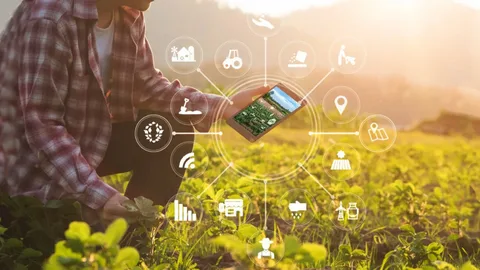
Agriculture has always been the backbone of human civilization, providing food, raw materials, and employment to millions of people worldwide. However, traditional farming practices, while effective for centuries, have often faced challenges like limited efficiency, resource wastage, and vulnerability to climate change. In recent years, AgTech innovations—a fusion of agriculture and technology—have emerged as a transformative force. These innovations are redefining farming, making it more efficient, sustainable, and adaptable to the challenges of the modern world.
The Rise of AgTech Innovations
AgTech, short for smart agriculture technology, refers to the use of technology to enhance various aspects of farming. From precision farming to digital platforms, AgTech innovations are rapidly changing how crops are grown, harvested, and distributed. The advent of data analytics, IoT (Internet of Things), AI (Artificial Intelligence), and drones are just a few examples of how technology is reshaping the agricultural landscape.
Precision Agriculture: The Future of Farming
One of the most significant AgTech innovations is the advent of precision agriculture. Using sensors, GPS, and satellite imagery, farmers can gather real-time data on soil health, weather patterns, crop conditions, and more. This information allows farmers to make data-driven decisions, optimizing inputs like water, fertilizer, and pesticides. As a result, resources are used more efficiently, and yields are maximized, leading to both economic and environmental benefits.
Drones and Robotics: Automating the Agricultural Process
Drones and robotics are at the forefront of the AgTech revolution, offering the ability to automate many traditional farming tasks. Drones are used to monitor crop health, identify pest outbreaks, and even spray fertilizers or pesticides precisely where needed. Meanwhile, autonomous tractors and harvesters are improving efficiency by reducing human labor costs and minimizing the risk of errors. These technologies enable farmers to operate with higher precision and fewer resources, which is particularly valuable in large-scale operations.
Sustainability and AgTech: A Green Revolution
One of the most promising aspects of AgTech innovations is their potential to promote sustainability in agriculture. Traditional farming methods often result in soil degradation, water overuse, and pesticide contamination. However, AgTech solutions are helping to reduce agriculture’s environmental footprint.
Smart Irrigation Systems: Conserve Water, Maximize Yields
Water scarcity is one of the biggest challenges facing the agricultural industry. Smart irrigation systems, powered by sensors and AI, ensure that water is used efficiently. These systems monitor soil moisture levels and weather forecasts to deliver the right amount of water to crops at the right time. As a result, farmers can reduce water waste while maintaining healthy crops, helping to conserve one of the planet’s most precious resources.
Vertical Farming: Bringing Agriculture to Urban Spaces
Another innovation that stands at the intersection of AgTech and sustainability is vertical farming. This method involves growing crops in stacked layers, often within controlled indoor environments, using significantly less water and land than traditional farming. By incorporating hydroponics or aeroponics (soil-free farming), vertical farming can be practiced in urban spaces, making fresh produce more accessible while minimizing transportation costs and carbon emissions.
The Future of AgTech: A Smart Industry on the Horizon
The potential for AgTech innovations to transform traditional agriculture into a smart industry is vast. As the industry becomes more data-driven and technology-focused, farmers will gain access to powerful tools that allow them to make informed decisions, improve productivity, and reduce environmental impacts. The integration of AI and machine learning will further enhance predictive capabilities, allowing for anticipatory farming rather than reactive approaches.
Moreover, blockchain technology is also being explored for traceability in the supply chain. This could help consumers know exactly where their food comes from, while also ensuring greater transparency and reducing food fraud.
Conclusion
In conclusion, AgTech innovations are revolutionizing traditional farming, bringing new levels of efficiency, sustainability, and precision to the agricultural industry. From precision farming to smart irrigation and vertical farming, these technologies are enabling farmers to meet the growing global demand for food while also addressing some of the world’s most pressing environmental challenges.
